
What is CHW Work?
Build Community Wellness Plans
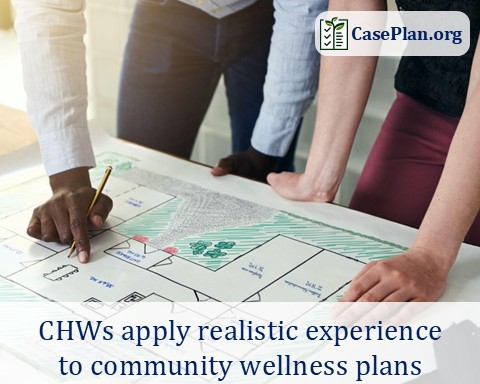
When CHWs are included early in planning and their feedback is incorporated, programs use their resources in more impactful ways and don't waste money on projects that don't resonate with the community.
A needs assessment finds out what a community is struggling with. A wellness plan turns that into priorities, responsibilities, and dates. CHWs are how the plan stays honest. They collect the story firsthand, carry it into rooms it would not otherwise reach, and speak up when the final document has dropped the thing everyone said mattered most.
Rather than a never ending list of lessons learned after programs fail, early documentation allows design changes.
Asked early
- "Those hours will not work for our night and swing shift clients."
- "That group will not come to this community center."
- "It needs to be on a more active bus line."
Asked late
- "I guess people are not interested in this service."
- Things we ought to have known go into next year's "lessons learned" section.
- The building is already built where too far away.
Get curious
- Has anyone ever asked you what your neighborhood needs? Did anything happen?
- Real needs assessments are sitting in this library. Go see what your community already said.